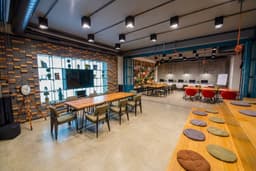
The future of commercial spaces is evolving faster than ever, with smart buildings becoming a central part of corporate, retail, hospitality, and institutional environments. As businesses prioritise automation, sustainability, employee wellbeing, and operational efficiency, smart buildings are no longer optional—they are becoming the new standard.
At the core of this transformation are design and build companies, which are driving innovation by integrating intelligent systems, data-driven solutions, and human-centric design approaches. From concept and planning to execution and long-term maintenance, these companies are shaping how modern buildings function and respond to occupants’ needs.
The Rise of Smart Buildings: Why They Matter Now
Smart buildings use connected systems, IoT (Internet of Things), automation, and real-time data to optimize internal performance. These capabilities help reduce energy costs, improve comfort, enhance security, and enable predictive maintenance.
A global shift toward flexible workplaces, digital transformation, sustainability mandates, and employee experience-driven design has accelerated the adoption of smart building technology.
Some of the major benefits include:
- Lower energy consumption and operational cost
- Increased workplace efficiency and productivity
- Enhanced safety and access control
- Predictive maintenance and reduced downtime
- Support for hybrid and remote work models
- Improved indoor air quality and comfort
Businesses now expect spaces to be adaptable, intelligent, and future-proof — and design and build companies are playing a pivotal role in making that possible.
How Design and Build Companies Transform Traditional Spaces into Smart Ecosystems
Unlike traditional construction models, design and build firms manage the full lifecycle of a project—from planning, designing, sourcing, and engineering to construction and technological integration. This unified workflow allows for seamless implementation of smart solutions without costly redesigns or delays.
Here’s how they are leading the smart building revolution:
1. Technology-First Planning and Concept Development
Modern design and build companies begin with technology roadmapping, ensuring that smart systems are integrated from day one. This includes planning for:
- IoT sensor networks
- Cloud-based automation platforms
- Smart HVAC and lighting systems
- AI-enabled building management systems (BMS)
- Digital access and security controls
- Power and data infrastructure
- AV and workplace experience tools
By aligning technology planning with architectural and interior design strategies, they ensure every system works cohesively rather than as a later-added patchwork.
2. Human-Centric Smart Interior Design
While technology is at the core, smart buildings must enhance human experience. Design and build companies focus on user-centred design principles, including:
- Ergonomics
- Lighting and acoustic comfort
- Spatial zoning based on behavior and workflow
- Smart furniture and connected workstations
- Hybrid meeting rooms and collaboration pods
Technology is integrated to support intuitive use—not complicate it. For example, occupancy sensors, wayfinding displays, and touchless systems improve both convenience and UX.
3. Energy-Efficient Smart Systems and Sustainability Goals
Sustainability is one of the biggest drivers behind smart building adoption. Design and build companies integrate solutions such as:
- Smart LED lighting with daylight harvesting
- AI-driven HVAC control
- Solar energy monitoring
- Water optimization systems
- Passive design principles
- LEED, WELL, and IGBC-compliant materials and practices
These elements create eco-friendly commercial environments that reduce carbon footprints and support ESG reporting.
4. Seamless Integration of Automation and IoT
Devices and systems in a smart building must communicate smoothly. Design and build companies ensure interoperability through:
- Unified automation platforms
- Smart hubs and middleware
- API-based integration
- Cloud and edge computing
Examples include:
| Feature | Smart Solution |
| Lighting | Motion-based auto ON/OFF + brightness control based on daylight |
| Climate | Adaptive HVAC using occupancy patterns |
| Security | Facial recognition entry and smart surveillance |
| Workplace Operations | Digital access passes, indoor navigation, meeting room booking |
This integrated ecosystem helps buildings learn, adapt, and evolve through real-time data.
5. Future-Ready Infrastructure for Scalability
Smart building technologies rapidly evolve. A key advantage of the design and build approach is preparing infrastructure for:
- Future upgrades
- Modular expansion
- New tech adoption
This includes advanced cabling systems, flexible layouts, modular construction methods, and cloud-connected OT (Operational Technology). As technology updates, the building remains future-ready without requiring complete renovation.
6. Post-Build Support, Monitoring, and Optimization
Unlike traditional contractors, modern design and build partners provide ongoing technical support, including:
- Data analytics dashboards
- BMS fine-tuning
- Predictive maintenance
- Software and firmware updates
- User training and change management
Their role often continues long after construction is complete as smart buildings evolve and improve over time.
Smart Building Features Most in Demand Today
Businesses adopting smart building solutions typically prioritize:
- Touchless entry and automation
- Remote access and IoT-enabled control
- Real-time occupancy analytics
- Smart conference rooms for hybrid work
- Indoor air quality monitoring
- Digital workplace apps
- Energy and carbon tracking dashboards
These trends reflect a shift from traditional spaces to intelligent, adaptive environments designed for modern work culture.
Industries Driving Adoption
Smart building solutions are increasingly common across:
- Corporate offices
- IT and tech parks
- Healthcare and research facilities
- Retail and hospitality
- Manufacturing, industrial, and logistics spaces
- Education and public sector infrastructure
Each sector applies smart building technology differently, but all share the same goal: efficiency, productivity, and sustainability.
The Future of Smart Buildings and the Role of Design and Build Firms
As AI, automation, and digital ecosystems evolve, smart buildings will continue to shift from responsive systems to predictive and fully autonomous infrastructures. Design and build companies will remain at the forefront by leveraging:
- AI-powered digital twins
- Robotics and automation
- Smart material innovation
- Predictive analytics for building performance
- Sustainability-focused modular construction
Smart buildings will increasingly mirror human behaviour—learning from usage patterns and optimizing environments accordingly.
Conclusion
The smart building revolution is redefining how commercial spaces function, operate, and enhance user experience. Design and build companies are leading this transformation with integrated thinking, unified delivery models, and future-ready solutions. By combining interior design, architecture, engineering, sustainability, and technology, they are shaping environments that are efficient, intelligent, and user-centric.
As digital transformation continues accelerating across industries, the influence of design and build companies will only grow stronger — helping businesses transition into a smarter, more sustainable, and highly connected future.