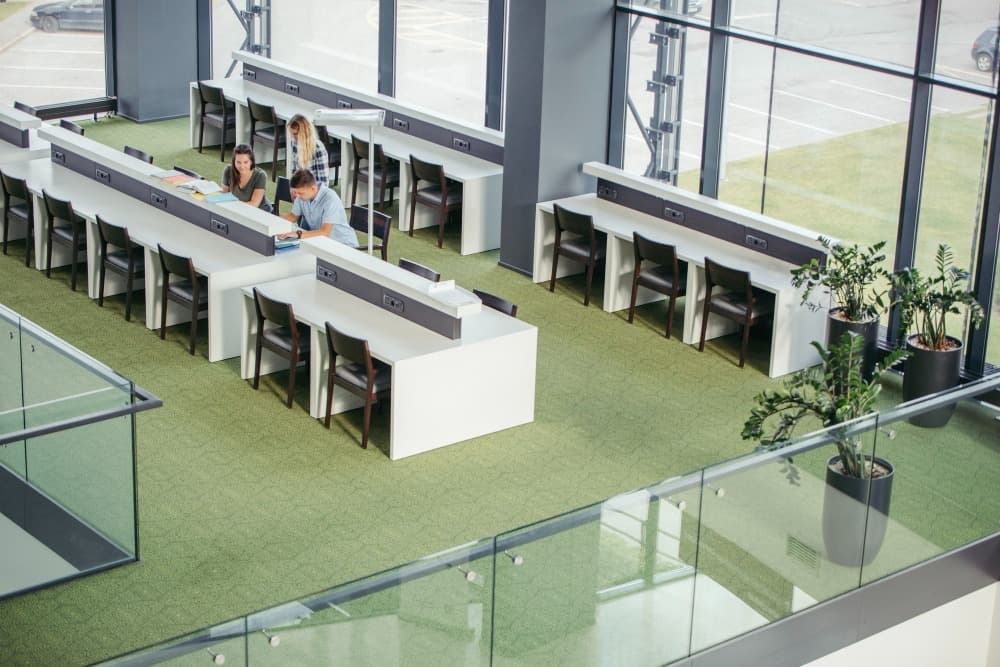
A premium office does not necessarily need a large floor area.
In fact, designing a compact workspace can require more thought than designing a larger one. Every square foot has to serve a purpose, circulation needs to be carefully planned, and furniture, lighting and finishes need to work together without making the office feel crowded.
Today, businesses are looking beyond size when creating professional workplaces. They want offices that feel sophisticated, represent their brand and provide employees with a comfortable environment to work and collaborate.
With the right approach, even a compact workplace can achieve the look and feel of luxury office interiors.
The key is not adding more elements. It is choosing the right elements and using the available space intelligently.
1. Start With Smart Office Space Planning
Good design begins with planning.
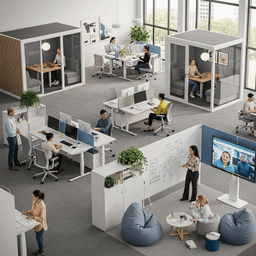
Before selecting furniture, colours or finishes, it is important to understand how the office will actually be used. Consider the number of employees, departments, meeting requirements, storage needs and areas required for visitors.
Effective office space planning can help identify spaces that are being underused and find ways to make them more functional.
For example, a large enclosed meeting room may not always be necessary. A smaller meeting space with a glass partition could provide privacy while allowing light to move through the office.
Similarly, circulation areas can sometimes incorporate storage, display elements or informal seating without affecting movement.
In a compact office, every decision should have a purpose.
2. Choose Furniture That Fits the Space
Oversized furniture can quickly make a small office feel uncomfortable.
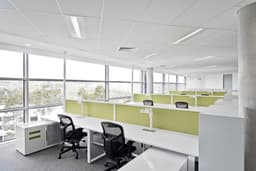
Instead, select furniture according to the scale of the room. Slim workstations, built-in storage, compact meeting tables and multifunctional furniture can help maintain a sense of openness.
For executive areas, a carefully proportioned desk paired with a comfortable visitor seating arrangement can create a sophisticated environment without occupying unnecessary floor space.
This is particularly important when creating executive workspace design in smaller offices.
Premium design is not about how large the furniture is. It is about how well it fits the space.
3. Use Glass to Create Visual Openness
Partitions are often necessary in offices, particularly for cabins and meeting rooms. However, solid partitions can make a compact workplace feel more enclosed.
Glass partitions can provide a useful alternative.
They can define different zones while allowing natural and artificial light to travel through the office. Frosted or fluted glass can also be introduced where additional privacy is required.
In compact office interiors, this approach can create a stronger connection between different areas while maintaining functional separation.
The result is a workplace that feels more open without completely removing private spaces.

4. Make Storage Part of the Design
Storage is often one of the biggest challenges in a smaller office.
Adding multiple standalone cabinets can consume valuable floor space and make the workplace look cluttered. Instead, storage can be integrated into walls, workstations and other architectural elements.
Built-in cabinets, overhead storage and concealed compartments can help keep everyday items organised while maintaining a cleaner visual appearance.
This approach is especially useful for premium office design, where a neat and uncluttered environment contributes significantly to the overall look.
When storage becomes part of the architecture rather than an afterthought, the office can feel more intentional and refined.

5. Create a Strong Reception Without Overcrowding It
The reception area is often the first point of contact for clients and visitors, so it deserves attention even when space is limited.
A compact reception can still make a strong impression through thoughtful material selection, lighting and branding.
Instead of filling the area with furniture, focus on one or two strong design elements. A well-designed reception desk, feature wall, subtle brand signage or statement lighting can establish the identity of the office.
For luxury commercial interiors, quality finishes and detailing can often have more impact than excessive decoration.

6. Use Lighting to Create a Premium Feel
Lighting can completely change the perception of a compact office.
A combination of ambient, task and accent lighting can add depth to the space and highlight important architectural features.
Linear lighting can emphasise ceiling geometry, while accent lighting can draw attention to artwork, branding or textured walls.
Where possible, make the most of natural light. Open layouts and glass partitions can help distribute daylight deeper into the workplace.
The goal is to create a layered lighting environment rather than relying on one uniform light source.
7. Use Materials Strategically
Premium materials do not have to be used everywhere.
In fact, using too many finishes can make a compact office feel visually busy. Instead, select a restrained material palette and use feature materials where they will have the greatest impact.
A combination of wood, glass, stone-look surfaces, metal detailing or textured finishes can create a sophisticated environment when used thoughtfully.
For luxury office interiors, consistency is often more important than quantity.
A simple material palette with good detailing can look more premium than a space filled with expensive materials competing for attention.
8. Introduce Flexible and Multi-Functional Spaces
When floor area is limited, spaces should ideally perform more than one function.
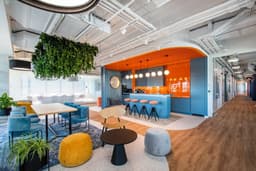
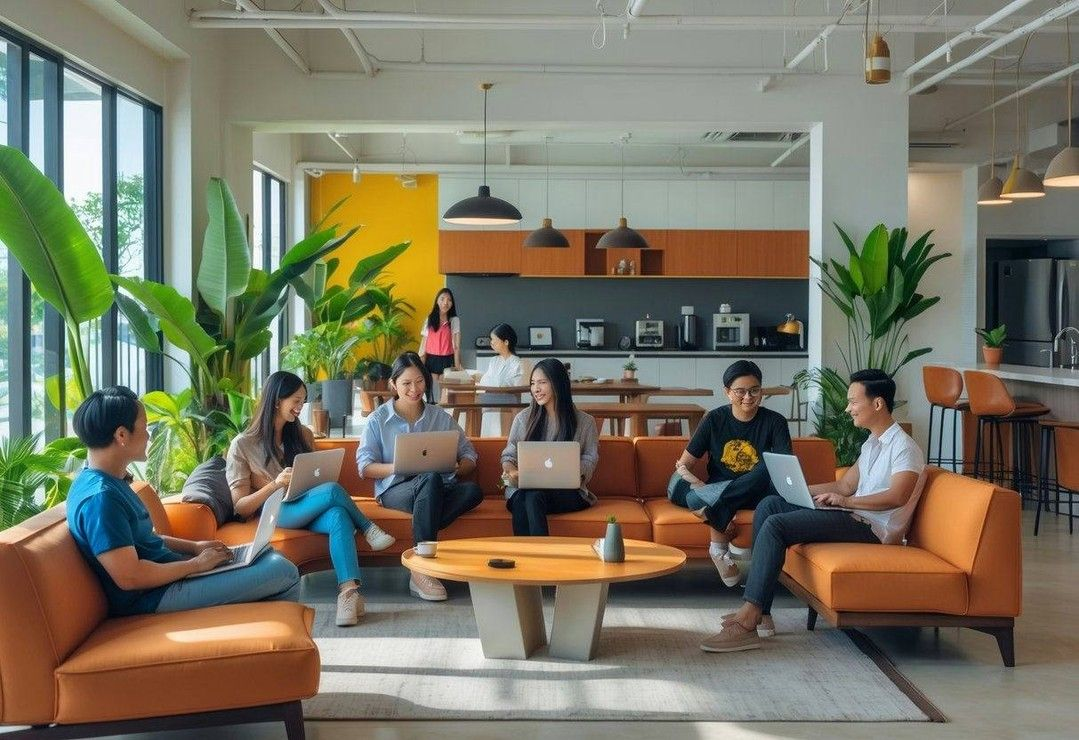
A small lounge can double as an informal meeting area. A cafeteria can provide additional collaborative seating. A meeting room can be designed with flexible furniture so it can accommodate workshops or team discussions when required.
This kind of flexibility is becoming increasingly important in modern office interiors.
Rather than assigning every square foot to one specific activity, designers can create spaces that adapt according to the needs of the business.
9. Add Personality Without Adding Clutter
A premium office should reflect the company’s identity.
This can be achieved through colours, artwork, graphics, furniture, lighting and carefully selected decorative elements. However, compact offices need restraint.
Too many visual elements can make the workplace feel smaller.
A better approach is to select a few distinctive elements and give them enough space to stand out. A branded feature wall, statement artwork or carefully designed executive cabin can provide personality without overwhelming the workplace.
The result is a more sophisticated environment that feels intentional rather than over-designed.
10. Think Vertically
When floor space is limited, look beyond the floor.
Walls and vertical surfaces can provide opportunities for storage, branding, display areas and architectural detailing.
Full-height storage can maximise capacity without taking up additional floor area. Vertical timber elements, wall panelling or lighting details can also draw the eye upward and create a greater sense of height.
This is a simple but effective strategy for small office design ideas, particularly when the available floor area is restricted.
Premium Design Is About How the Space Feels
Creating a premium office in a compact space is ultimately about balance.
The objective is not to make a small office look larger at any cost. It is to make the available space feel comfortable, organised and purposeful.
Thoughtful office space planning, appropriately scaled furniture, integrated storage, effective lighting and carefully selected materials can transform even a compact workplace.
A premium office should also work for the people using it every day. Comfortable workstations, practical meeting spaces, adequate storage and areas for collaboration are just as important as the visual appeal.
At Onefold Designs, we believe that good commercial interiors should balance aesthetics with functionality. Whether it is a compact corporate office, an executive workspace or a larger commercial environment, every project should respond to the way people work and the identity of the business.
Planning a Premium Office in Bangalore?
You don’t need a large floor plate to create an impressive workplace.
With the right design strategy, even a compact office can become a sophisticated, efficient and comfortable environment that reflects your brand.
Looking to transform your office space? Talk to Onefold about creating a premium workplace designed around your business, people and available space.