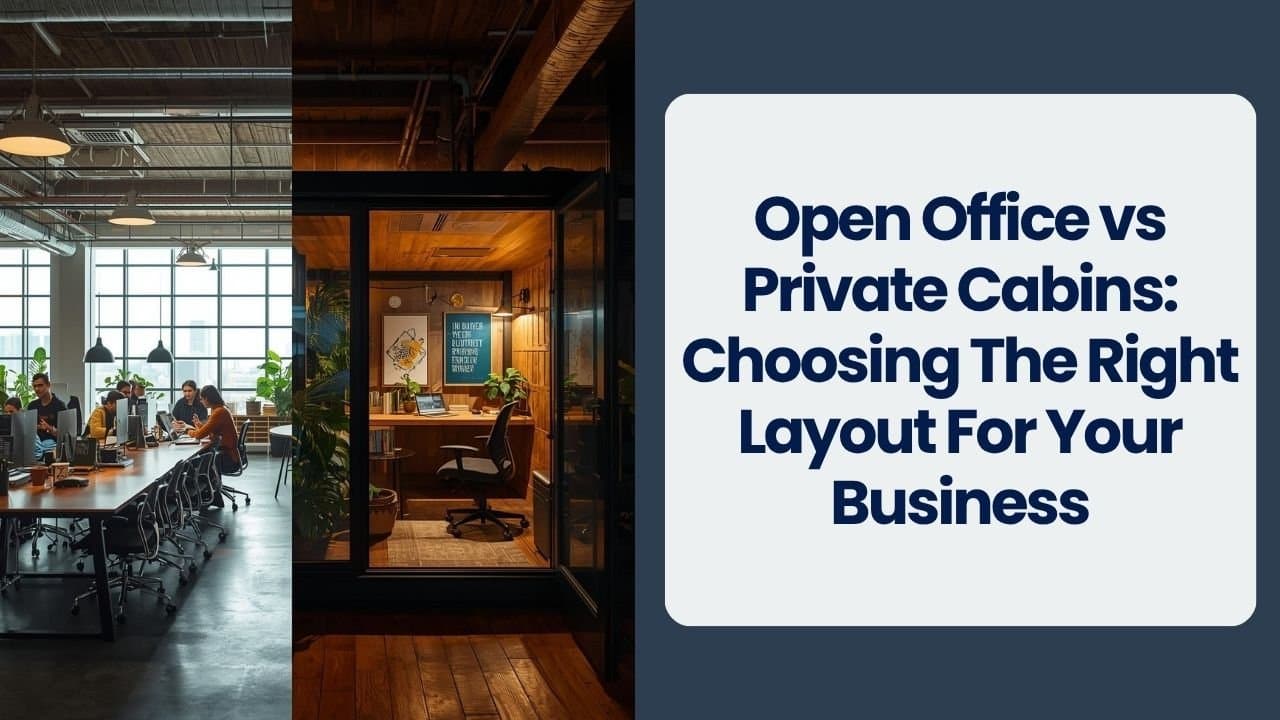
The layout of a workspace plays a critical role in shaping the culture, communication, and efficiency of an organization. In today’s fast-paced corporate world, the office design is no longer just about where employees sit — it’s about how the environment supports collaboration, creativity, and concentration. The debate between open offices and private cabins continues to evolve as businesses seek the ideal balance between teamwork and privacy.
Modern office interiors are designed with purpose — blending aesthetics with functionality and reflecting a company’s identity and workflow. Some organizations prefer the open office concept, which encourages collaboration and energy, while others value the privacy and focus that come with individual cabins. Both layouts have their advantages and challenges, and the choice depends largely on the nature of your business, team dynamics, and work culture.
In this blog, we’ll explore the major differences between open offices and private cabins, helping you make an informed decision on which office design best aligns with your business goals.
Open Office vs. Private Cabins
1. Collaboration vs. Privacy
- Open Office:
- The open office layout promotes easy communication and teamwork by removing physical barriers. Employees can share ideas instantly, encouraging innovation and quick decision-making. This setup is particularly beneficial for creative industries like marketing, design, or startups where collaboration drives results.
- Private Cabins:
- On the other hand, private cabins provide focused environments ideal for tasks that require concentration and confidentiality. Managers, HR professionals, and developers often benefit from having a quiet, personal space that minimizes interruptions and supports deep work.
2. Space Utilization and Flexibility
- Open Office:
- Open layouts make the most of available space and offer flexibility for reconfiguration. Desks and modular furniture can be rearranged easily to accommodate changing team sizes or project needs. This adaptability is a major advantage for growing businesses or dynamic teams.
- Private Cabins:
- Cabins, however, require more space per employee and are less adaptable. They create a structured environment but can limit how efficiently the total office area is used. For businesses with stable team structures, this may not be a drawback.
3. Cost and Maintenance
- Open Office:
- From a financial standpoint, open offices are generally more cost-effective to design and build. They require fewer walls, partitions, and materials, leading to lower construction and maintenance costs. Shared utilities and equipment also help minimize expenses.
- Private Cabins:
- Private cabins demand higher investment in materials, furnishings, and maintenance. However, this investment can be justified for businesses that prioritize privacy, client meetings, or executive-level workspaces.
4. Noise and Distractions
- Open Office:
- While open offices encourage collaboration, they often struggle with noise levels. Conversations, phone calls, and movement can create distractions, affecting focus and productivity. Acoustic panels and quiet zones can help, but they don’t eliminate the issue entirely.
- Private Cabins:
- Cabins provide sound isolation, allowing employees to work without disturbances. This is especially important for roles that require confidentiality or extended periods of concentration.
5. Employee Morale and Comfort
- Open Office:
- The social energy in open layouts fosters a sense of community and inclusion. However, some employees may feel exposed or uncomfortable without personal space. Balancing openness with small breakout zones can help maintain morale.
- Private Cabins:
- Private spaces offer comfort and control, which can improve satisfaction for employees who value personal environments. Yet, it can also lead to isolation or reduced team interaction if not balanced with collaborative spaces.
6. Communication and Transparency
- Open Office:
- Transparency is a hallmark of open offices — employees can easily approach colleagues and managers, promoting open communication and a flat hierarchy. It encourages a culture of accessibility and teamwork.
- Private Cabins:
- While cabins support focus, they can create a sense of hierarchy or separation. However, they also enable confidential discussions, performance reviews, or client meetings that require discretion.
7. Branding and Office Aesthetics
- Open Office:
- An open layout can reflect a brand’s modern and collaborative ethos. When designed well, open office interiors with clean lines, natural lighting, and dynamic zones can make a strong impression on clients and new hires.
- Private Cabins:
- Cabins can convey professionalism, structure, and exclusivity. They often align with traditional or corporate environments where formality and authority are part of the brand image.
Conclusion
Choosing between an open office and private cabins is ultimately about aligning your office design with your company’s identity, work processes, and goals. Both layouts have the potential to enhance productivity when designed thoughtfully — open offices drive collaboration, while private cabins promote focus and confidentiality.
A hybrid approach is increasingly popular in modern office interiors, blending the best of both worlds. This involves creating open collaborative zones alongside private pods or cabins, offering employees flexibility to choose how and where they work.
Investing in a balanced office design ensures your workspace not only looks impressive but also functions efficiently — fostering communication, creativity, and comfort. Whether you lean towards openness or privacy, the key lies in designing an environment that empowers your people and reflects your brand’s unique character.